


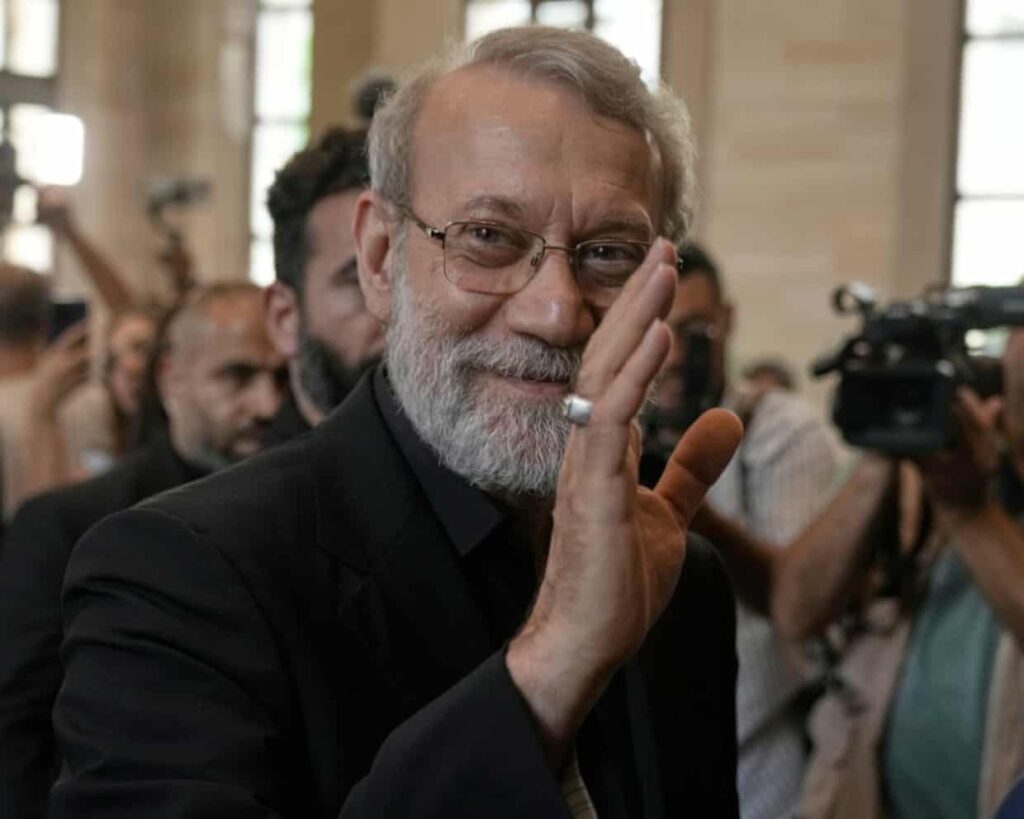
TEHRAN — After years on the political sidelines, has re-emerged as a key figure in Iran’s leadership, marking a significant shift in the country’s internal power dynamics at a time of heightened regional tension.
Once seen as a strong contender for Iran’s presidency, Larijani’s political career appeared to stall when he was sidelined ahead of the election that ultimately brought to power. At the time, analysts widely believed influential factions within the backed Raisi’s rise, viewing Larijani as a potential obstacle.
His return to prominence last August, when he was appointed secretary of Iran’s Supreme National Security Council, signaled a notable comeback. Officials familiar with the decision pointed to his diplomatic experience — particularly his handling of relations with major powers like China and Russia — as well as his role in shaping Iran’s response to external threats, including potential confrontation with the United States.
Since resuming a central role, Larijani has taken a firm stance on domestic unrest. During economic protests earlier this year, he described the demonstrations as security threats rather than expressions of public dissent, reflecting the government’s hard line toward internal opposition.
Following the reported death of Supreme Leader , Larijani moved quickly to address the nation, presenting himself as a steady and experienced figure amid uncertainty. His public messaging emphasized continuity and stability, particularly as concerns grew about Iran’s strategic direction during a volatile period.
Despite his alignment with the establishment, Larijani has often been viewed as a pragmatic voice within Iran’s political system — someone capable of balancing hardline policies with strategic restraint.
In a late 2024 interview, Larijani reflected on the lasting impact of the deaths of senior regional figures, including and . He described their influence as enduring, framing their legacy as part of a broader cycle of leadership and resistance in the region.
As Iran faces mounting internal and external pressures, questions remain about the country’s ability to adapt. Analysts say the real test will be whether Iran can rebuild its leadership pipeline and intelligence capabilities after a series of setbacks.
For now, Larijani’s return underscores a broader reality: in times of uncertainty, Iran’s leadership appears to be leaning on experienced figures to navigate an increasingly complex geopolitical landscape.