

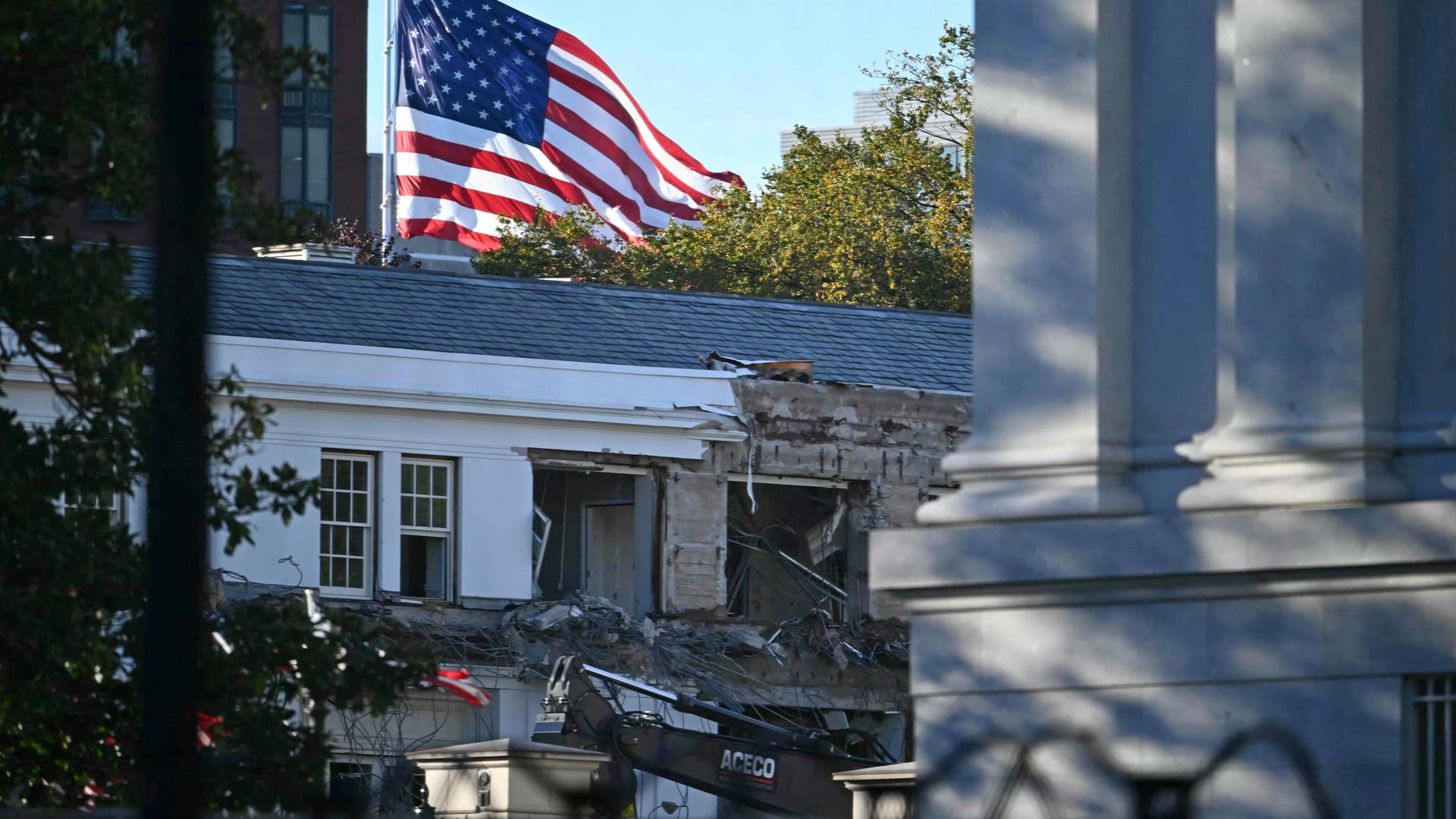
Washington, D.C. — President Donald Trump on Monday presided over the start of demolition work at the White House’s East Wing, marking the first step in his ambitious plan to construct a lavish, privately funded ballroom — a project estimated to cost more than $200 million.
In a post on Truth Social, Trump hailed the development as “a proud moment,” declaring, “I’m honored to be the first President to finally get this much-needed project underway — with zero cost to the American taxpayer.”
The planned expansion, which Trump has described as “a venue worthy of America’s greatness,” is being financed through private donors and corporations with close ties to his administration. While Trump and his team insist the funding model relieves the burden on taxpayers, critics say it raises fresh concerns about corporate influence and access to the White House.
A Controversial Makeover
No other president in modern U.S. history has been as personally involved in remodeling the White House as Trump. During his second term, he has gilded the Oval Office, replaced historic trees, repaved the Rose Garden, and overseen the installation of marble-tiled floors and ornate mirrors throughout the residence.
The upcoming ballroom — expected to be one of the largest additions to the presidential complex in decades — is designed to host official state functions, fundraisers, and international events. According to a senior official familiar with the project, Trump envisions it as “a symbol of American prestige and prosperity.”
But ethics experts say the initiative blurs the line between public service and private interest. “This is unprecedented,” said Walter Shaub, former director of the Office of Government Ethics. “When corporations and wealthy donors fund construction at the White House, it inevitably raises questions about what kind of access or influence they’re expecting in return.”
The Gilded Vision
Trump’s fascination with redesigning and reimagining the presidential residence reflects his well-known love for luxury and grandeur. From gold-accented furnishings in the Oval Office to custom art installations in the State Dining Room, the president has left an unmistakable personal stamp on 1600 Pennsylvania Avenue.
Sources familiar with Trump’s renovation plans say he personally reviewed architectural models and dioramas for potential projects, often giving direct input on aesthetic choices — from the shape of archways to the placement of marble inlays.
“President Trump sees the White House not just as a home, but as a reflection of America’s greatness — and his vision for it,” said one longtime aide.
A Dinner That Sparked More Questions
Last Wednesday, Trump hosted a gold-tinted dinner at the White House for several of the ballroom project’s major sponsors — an event that critics say underscores the pay-for-play dynamic that has become a hallmark of his administration’s relationship with corporate America.
Among the attendees were prominent executives from the energy, construction, and real estate industries — all of whom have had dealings with the federal government during Trump’s presidency.
“Anytime you see large private interests funding something this closely connected to the presidency, it raises legitimate concerns about ethics and transparency,” said Richard Painter, a former White House ethics lawyer. “Even if it’s technically legal, it sets a troubling precedent.”
An Unmistakable Legacy
Regardless of the political debate surrounding it, the ballroom project will likely ensure Trump’s influence on the White House endures for decades. Architectural historians say that even if future presidents reverse some of his design choices, elements like the new East Wing structure will become permanent fixtures.
Trump, for his part, appears unbothered by the criticism. “Every great building tells a story,” he wrote online. “And this one will tell the story of America’s comeback and strength.”
As construction crews continue their work on the East Wing, one thing is clear: Donald Trump’s vision for the White House is unlike any president’s before him — bold, controversial, and unmistakably his own.